Denis Smith
Denis Smith arrived at Bootham Crescent in March 1982 intending to spend just one month on loan. He was brought in by caretaker boss, Barry Swallow, to shore up our defence (and probably to further his education, in preparation for a planned career as a manager) after having spent his entire playing career with Stoke who at the time were a prospering top flight club. He was a veteran of over 600 games and was well known as the man who’d broken just about every bone in his body.
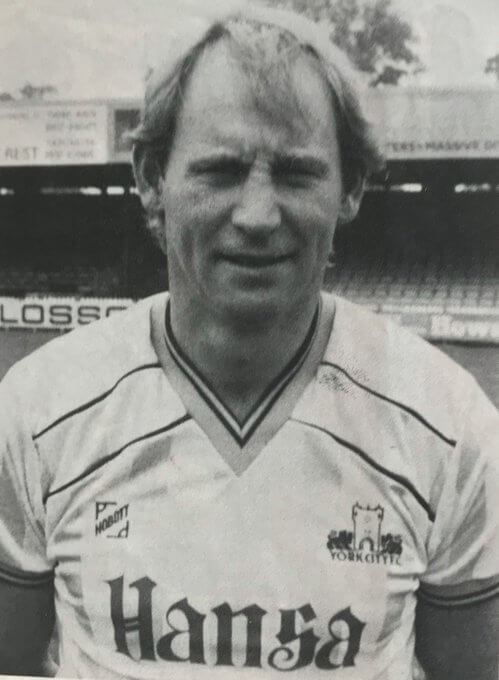
As a schoolboy, he refuses to take his 11+ exam as passing would have meant going to a non football playing school. His school team won the local cup competition in his final year, when he captain and effectively manager as the teacher who’d managed the team had left. One of a large family, his leadership skills stood out and he was Head Boy in his final year at school. At school, he also excelled at cricket as a quick left arm bowler, in later life, he once bowled out David "Bumble" Lloyd, the Lancashire and England opening bat.
As a player, he fell just short of international class. Several possible big money moves away from provincial Stoke to bigger teams fell through. In his autobiography, he recalls being tapped up when he was invited to a Manchester United dinner bash. Speaking on York Hospital Ball, he noted he’d been called up (when injured) to an England squad under Sir Alf Ramsey and later to a get together under Don Revie. In his playing career, he was invited to Manchester United for a Bobby Charlton testimonial event where senior players sold him the virtues of the club, other interest came from Leeds (“a world record bid for a centre half”), Brian Clough mainly via his wife (which was Clough’s modus operandi) and even Ajax, just post Johan Cryuff and their 3 successive European Cup wins (which dates the approach as late 1974 (after Ajax and Stoke played each other in European competition)).
An injury ravaged career probably meant football never truly saw the best of him as a player. It included 5 broken legs (in those days, it wasn’t a quick recovery) and he lost some of his pace after a 1975 cartilage operation.
With his playing career coming towards its end, he was in a dilemma. His options to move into management or coaching at Stoke were effectively blocked by Richie Barker, Stoke's young manager.
Arriving at Bootham Crescent, his first impressions of City were that we were an “absolute disaster with lots of running on Fridays before matches”. The coaching was archaic and poor training facilities. In the gym, he enquired about a young blonde player with tremendous skills, “that’s John Byrne, we’re trying to get rid of him, he is allergic to grass, he has asthma”. However, he also noted a further core of decent players, including Malcolm Crosby, Derek Hood, Brian Pollard, Gary Ford and Keith Walwyn as good players already there.
In May 1982, he returned to City as our new manager on a salary that was only half what he'd been on at Stoke. He recruited an old buddy, Viv Busby, as his assistant and rebuilt the team based around former colleagues. Roger Jones was in goal, Chris Evans and Alan Hay at full back and Sean Haslegrave in midfield. He also brought Ricky Sbragia in as centre back. More importantly, he changed the atmosphere at the club after 7 seasons in the doldrums, instilling a top level mentality around the whole club.
Smith had had a long term vision of being a manager, understanding the traits of top managers and even managing a local Sunday morning side in Stoke.
As manager, he felt his job was "to make your job as easy as possible” for everyone else.
Along with a couple of other signings, all free transfers, we didn’t start the 1982/3 season with any real confidence. Only Keith Walwyn, in his 2nd season with City, stood out as a player to be feared by the opposition.
However, Jones, with Ricky Sbragia and Smith transformed our defence. The coaching skills of Busby transformed John Byrne from someone who we couldn’t give away on a free transfer into a confidence laden striker, the artist to Walwyn’s brawn. Busby would keep Byrne and Walwyn back after training every Wednesday afternoon and give them intensive sessions on positioning and finishing. Veteran forward, Brian Pollard also appreciated the coaching input of Busby, noting how he would also direct from the dug out with Smith on the pitch. Smith fondly recalls how he re-invented Ricky Sbragia as a cultured centre half. His previous club saw him only as a clogger.
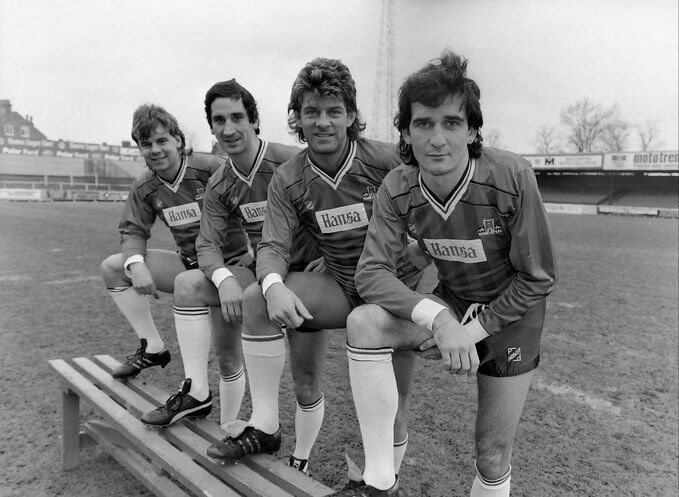
A run of home victories propelled us up the table. With Smith coming to the end of his playing career, he signed John MacPhail on a free from Sheffield United. The jigsaw was complete, but just too late for the 1982/3 season. Only poor away form kept us out of the top 4 and promotion.
Of that team, Smith would say
City made a good start to the 1984/5 season to be among the promotion contenders. In October, John Byrne left for QPR, then a top flight team. He made his Eire debut later that season. We struggled to replace Byrne, we paid a club record £50,000 for Dale Banton, an intelligent footballer, he never really gelled playing second fiddle to Walwyn, his best City days were after Walwyn left. An earlier Smith signing, Keith Houchen (later to star for Coventry in their 1987 FA Cup triumph) and Martin Butler also had mixed success alongside Walwyn that season.
Our best form was reserved for the FA Cup. We beat Arsenal on an icy pitch and then held the mighty Liverpool to a 1-1 draw. A 7-0 replay defeat doesn’t really tell how well City played, they would have beaten many better teams than City by 7-0 that night. The cup games caused a fixture backlog, and coupled with an injury to Keith Walwyn, our season petered out.
That summer, Smith believed he was in the frame to be offered the manager's post at Stoke, events conspired against the move. There was regular press speculation that he was in line for the vacant Stoke manager's position. His wife Kate noted, ”how would it feel when the fans are chanting ‘Smith Out’ as they inevitably would do”, so I'm not sure that he would have accepted if it had been offered.
The 1985/6 season followed a very similar pattern, good early season form, FA Cup 5th Round appointment with Liverpool. Again, we drew the game 1-1 and went to an Anfield replay. This time, Liverpool needed extra time to secure a 3-1 win. Alan Hansen and Mark Lawrenson will tell you that it was their hardest game on their way to lifting the trophy. To this day, no one can explain why a Keith Walwyn goal was disallowed, it would have given us a 2-1 lead with 20 minutes to go when we were completely outplaying Liverpool.
Smith’s plan was simple. Solid defence and solid strike force built around players who he knew from the past. His press statements invariably absolved players of any blame or criticism ("the ref gave a penalty and it was outside the area" and "I got the tactics wrong" are 2 quotes that I can still recall). Looking back, in some ways he was the Mourinho figure of his day, taking the pressure off his players. He was a young manager always ready with a thought provoking quote, unfortunately it was in an era just before the blanket coverage of televised football.
Added to the group mentality was team bonding. The players could be seen in The Bootham Tavern most Tuesday afternoons after training with the younger lads out clubbing till late into Tuesday night. Oscar's Wine Bar being just one regular haunt.
After 4 seasons, his magic was on the wane and coupled with John MacPhail’s departure, we struggled during the 1986/7 season, narrowly avoiding relegation. Various players were released, including Andy Leaning amidst rumours of a rift between manager and board (Smith wanted to offer the out of form keeper a new contract, the board wouldn't). Leaning was fixed up for a trial game with Everton (under Smith's good friend Howard Kendall) in May 1987 to give him an opportunity to put his name in the frame. That summer, he joined Sheffield United, a league above City.
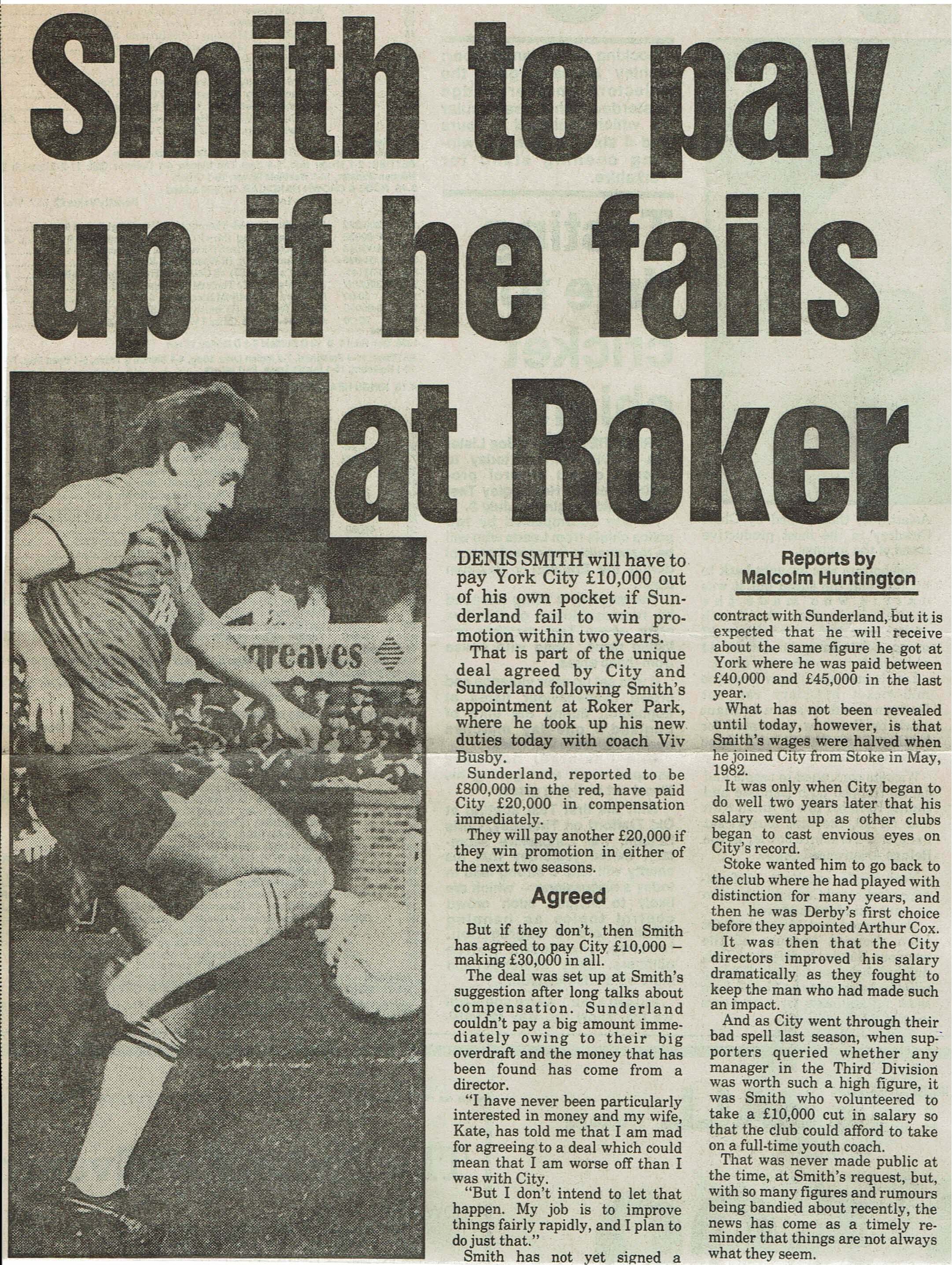
At the end of the season, he departed for Sunderland. In his later years with City, there was a certain amount of outrage at Smith's salary which was about £45,000 when he left, however, that was far short of the reported £200,000 that his predecessor Lawrie McMenemy had been on at Sunderland. It is believed that City received £30,000 in compensation from Sunderland (including £10,000 when they won promotion at the end of his first season in charge). Smith had said he'd pay the final £10,000 himself if Sunderland had not won promotion in his first 2 seasons at Roker Park. It wasn't the first time that Smith offered £10,000, previously, it was reported that he'd offered to take a £10,000 pay cut if the money could be used to appoint a full time youth coach. Thanks to director Colin Webb’s Volvo business, he left a plush Volvo behind at York for no company car at Sunderland.
Keith Houchen recalled, "I walked into a winning dressing room for the first time in my professional career. I was an ambitious young player and York was the launchpad for my career. It was my first taste of a winning team. Denis and Viv bounced ideas off each other really well and training was never boring. They got everything right and were tactically clever. It was a dream for me." Chris Evans noted, "There was great belief and motivation in the team that we could win games before we even got on the pitch. It was like a snowball gathering snow and we kept rolling forward. Denis and Viv were the good cop, bad cop. Denis was the disciplinarian and Viv was the arm around the shoulder."
Read: Smith's Return / Sunderland's Shame
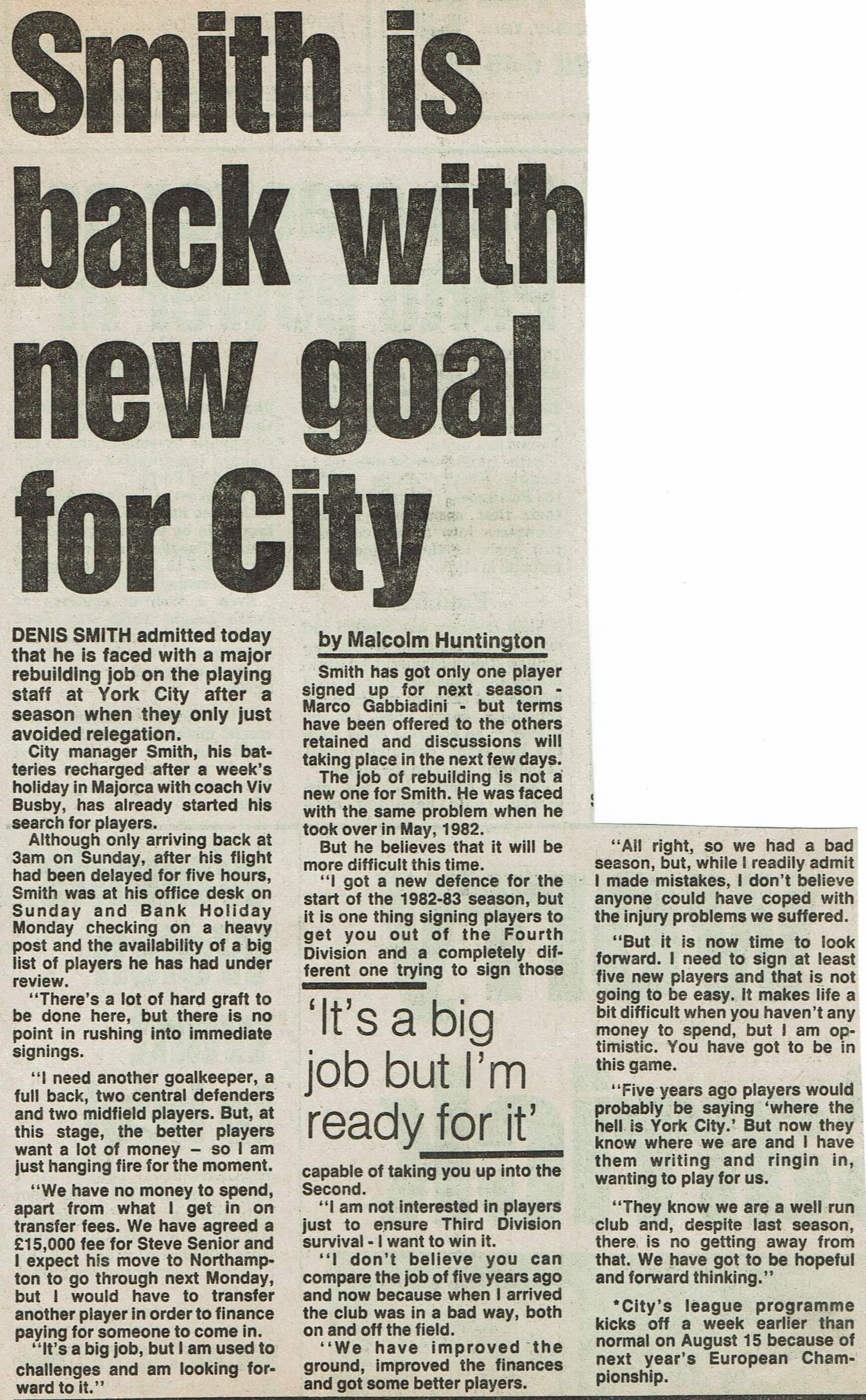
City were relegated a year later under Booby Saxton. Later, at City's AGM, chairman Michael Sinclair put the cause of City's decline plainly on Smith's shoulders stating he refused the offer of a substantial sum of money with which to strengthen the team and then he didn’t get on with renewing contracts. Saxton arrived with very few players contracted for his first season, although many did eventually re-sign.
In his autobiography, Smith fondly recalls his time at York. He describes his chairman, Michael Sinclair, as a "true gent" and holds Malcolm Huntington in high esteem. He's particularly proud of the number of his players who went onto long and rewarding coaching and managerial careers, listing Ricky Sbragia, Chris Evans and Malcolm Crosby as being at Premiership clubs in the 2008/9 season, whilst the long forgotten Sean Haslegrave was still coaching a national England school age side. He also recalls how he suspected Steve Senior of having poor eyesight when he noticed how he had trouble picking up clearances from Roger Jones. Having eye tested all the players, it was proven that Roger Jones was actually blind in one eye. He regrets losing Alan Pearce, a talented player who Smith paid too little, leading to a poor lifestyle and subsequent loss from the game. He wasn't particularly impressed on first meeting Tony Canham and all his tattoos.
He also probably regrets not following up his interest on some other young players, including Gary Pallister (Middlesbrough reserves) and Steve Bould (known from his Stoke days).
At Sunderland, whose first ever relegation to Division 3 shocked the club and prompted a change of approach following the McMenemy years of excesses and excuses. After such a big name, Smith's appointment was not favourably by everyone in Sunderland. However, new club, new challenge, Smith gained immediate promotion, built largely around a new strike force, the veteran Eric Gates and a young Marco Gabbiadini who he signed from City. Having only made his City debut a few months earlier, his talent and pace were considerable but he’d failed to convert his chances, his head hung low and lacking in confidence as we struggled under Booby Saxton with a virtually new team.
At Sunderland, Gabbiadini immediately started scoring. Immediate promotion followed. Smith signed a new central defensive lynchpin, John MacPhail, and soon Sunderland were back in the top flight. Gabbiadini’s £80,000 fee was quickly repaid and then repaid again as he moved onto Crystal Palace for £1.5m.
But once again, the Smith magic wore thin and he was sacked in December 1991, just a few months after turning down the manager's job at Stoke.
A new start and a new striker saw him revive Bristol City’s fortunes. He plucked Andy Cole out of Arsenal’s reserves and turned him into a prolific striker before Newcastle, Manchester United and England followed for Cole. Smith later had 2 spells at Oxford, with WBA in between, before he was sacked as Wrexham manager in 2007, some people had his name in the frame to replace Billy McEwan back at City later that year.
Much of Smith’s success was built on players and coaches he already knew. He brought Viv Busby to City as his coach and they moved together to Sunderland, some would say that Busby’s acrimonious departure from Roker Park was precipitated by their board rather than Smith. After Busby’s departure, Malcolm Crosby took over as Sunderland’s coach, another person Smith had first encountered at City.
Whilst with City, and once Smith had established a winning team, one of his biggest failures was to promote young players from the reserves, although the likes of Mick Astbury, Andy Leaning, Martin Butler and Steve Senior all had first team opportunities, none could claim to have had a long and successful career with us. At a time when we were winning regularly, it should have been possible.
His failure to "repeat" his success, ultimately proved to be his undoing at City, Sunderland and Bristol City, which probably proves one of my long held theories that it is easy to motivate oneself once, but much harder to do it again.
Denis Smith is one of the rare breed of managers to have over 1,000 games under his managerial belt, so he must be doing something right. Incidentally, another manager with City connections to later join that rare breed was Neil Warnock.
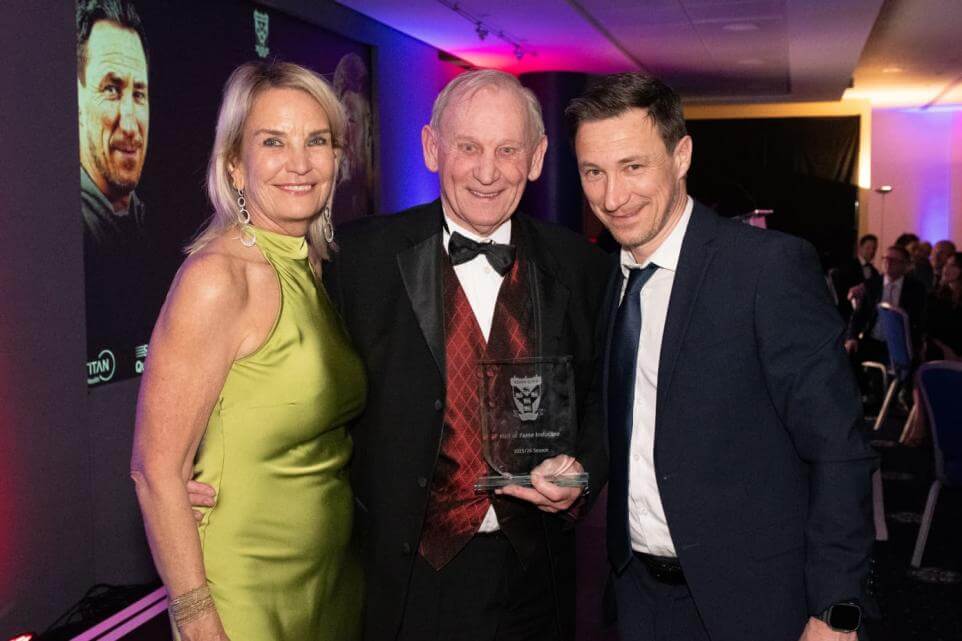
At City's Player Of The Year Gala Dinner on April 15, 2026, Denis Smith was inducted into City's Hall Of Fame. Read More.